Skip to content

  • About
    • Our Mission
    • Participating Institutions
    • Collaborations
    • Boards
    • Diversity
    • SCIoI Cluster Reports
    • Labs and Facilities
    • Newsletter
    • Contacts
  • Research
    • SCIoI Disciplines
    • Research Projects
    • Research Structure
    • Research Proposal (2026-2032)
    • Candidate Principles of Intelligence
    • Research Data
    • Final theses
    • Grants & Awards
    • SCIoI Publications
  • Activities
    • Intelligence Lectures
    • Lecture Series
    • Press coverage
    • TV/Radio Coverage
    • SCIoI Fair
    • Punching Cards Podcast
    • SCIoI Talks & Videos
    • Outreach Activities
    • Press Room
  • People
  • Education
    • Doctoral Program
    • Master’s Track
    • Conferences and Collaborations
  • Events
  • News
  • Jobs
  • About
    • Our Mission
    • Participating Institutions
    • Collaborations
    • Boards
    • Diversity
    • SCIoI Cluster Reports
    • Labs and Facilities
    • Newsletter
    • Contacts
  • Research
    • SCIoI Disciplines
    • Research Projects
    • Research Structure
    • Research Proposal (2026-2032)
    • Candidate Principles of Intelligence
    • Research Data
    • Final theses
    • Grants & Awards
    • SCIoI Publications
  • Activities
    • Intelligence Lectures
    • Lecture Series
    • Press coverage
    • TV/Radio Coverage
    • SCIoI Fair
    • Punching Cards Podcast
    • SCIoI Talks & Videos
    • Outreach Activities
    • Press Room
  • People
  • Education
    • Doctoral Program
    • Master’s Track
    • Conferences and Collaborations
  • Events
  • News
  • Jobs
12 events found.

Events Search and Views Navigation

Event Views Navigation

  • List
  • Month
Today
  • January 2023

  • Thu 5
    Distinguished Speaker Series
    5 January, 2023 @ 4:00 pm

    Peter Neri (Laboratoire Des Systèmes Perceptifs, CNRS, Paris), “The Unreasonable Recalcitrance of Human Vision to Theoretical Domestication”

    Abstract: We can view cortex from two fundamentally different perspectives: a powerful device for performing optimal inference, or an assembly of biological components not built for achieving statistical optimality. The former approach is attractive thanks to its elegance and potentially wide applicability, however the basic facts of human pattern vision do not support it. Instead,

  • Thu 12
    Thursday Morning Talk
    12 January, 2023 @ 10:00 am - 11:00 am

    Dustin Lehmann, Fritz Francisco, Jorg Raisch, Pawel Romanczuk (Science of Intelligence), “Dynamical Adaptation and Learning: Knowledge Transfer and Cooperative Learning in Groups of Heterogeneous Agents”

    Abstract:  In groups of agents learning how to solve a common task, interaction and knowledge transfer between agents is important and can vary depending on network topology. Heterogeneity is one of the key principles that influences the type and quality of interaction between learning agents. Different learning strategies and behaviors can be a driving factor

  • Thu 19
    Thursday Morning Talk
    19 January, 2023 @ 10:00 am - 11:30 am

    David Garzón Ramos (Université Libre De Bruxelles), “Automatic Design of Robot Swarms: Context and Experiments”

    Abstract: Swarm robotics is a promising approach to the coordination of large groups of robots. Traditionally, the design of collective behaviors for robot swarms has been an iterative manual process: a human designer manually refines the control software of the individual robots until the desired collective behavior emerges. In this talk, I discuss automatic design

  • Thu 19
    Distinguished Speaker Series
    19 January, 2023 @ 4:00 pm - 5:30 pm

    Ingmar Posner (University of Oxford), “Learning to Perceive and to Act – Disentangling Tales from (Structured) Latent Space”

    Abstract: Unsupervised learning is experiencing a renaissance. Driven by an abundance of unlabelled data and the advent of deep generative models, machines are now able to synthesise complex images, videos and sounds. In robotics, one of the most promising features of these models - the ability to learn structured latent spaces - is gradually gaining

  • Thu 26
    Thursday Morning Talk
    26 January, 2023 @ 10:00 am - 11:00 am

    Scott Robins (Bonn University), “What Machines Shouldn’t Do”

    Abstract: From writing essays to evaluating potential hires, machines are doing a lot these days. In all spheres of life, it seems that machines are being delegated more and more decisions. Some of these machines are being delegated decisions that could have significant impact on human lives.Examples of such machines which have caused such impact

  • Thu 26
    26 January, 2023 @ 4:00 pm - 5:30 pm

    Lars Lewejohann (Science of Intelligence), “What’s on a Mouse’s Mind? Behavioral Measures To Understand Experiences and Needs of an Animal”

    MAR 2.057

    Lars Lewejohann, Freie Universität Berlin, German Federal Institute for Risk Assessment (BfR), German Centre for the Protection of Laboratory Animals (Bf3R) Mice, like all other living creatures, have adapted to specific living conditions in the course of evolution. From a human point of view, the behavior of animals is therefore not always easy to understand.
  • February 2023

  • Thu 9
    Thursday Morning Talk
    9 February, 2023 @ 10:00 am - 11:00 am

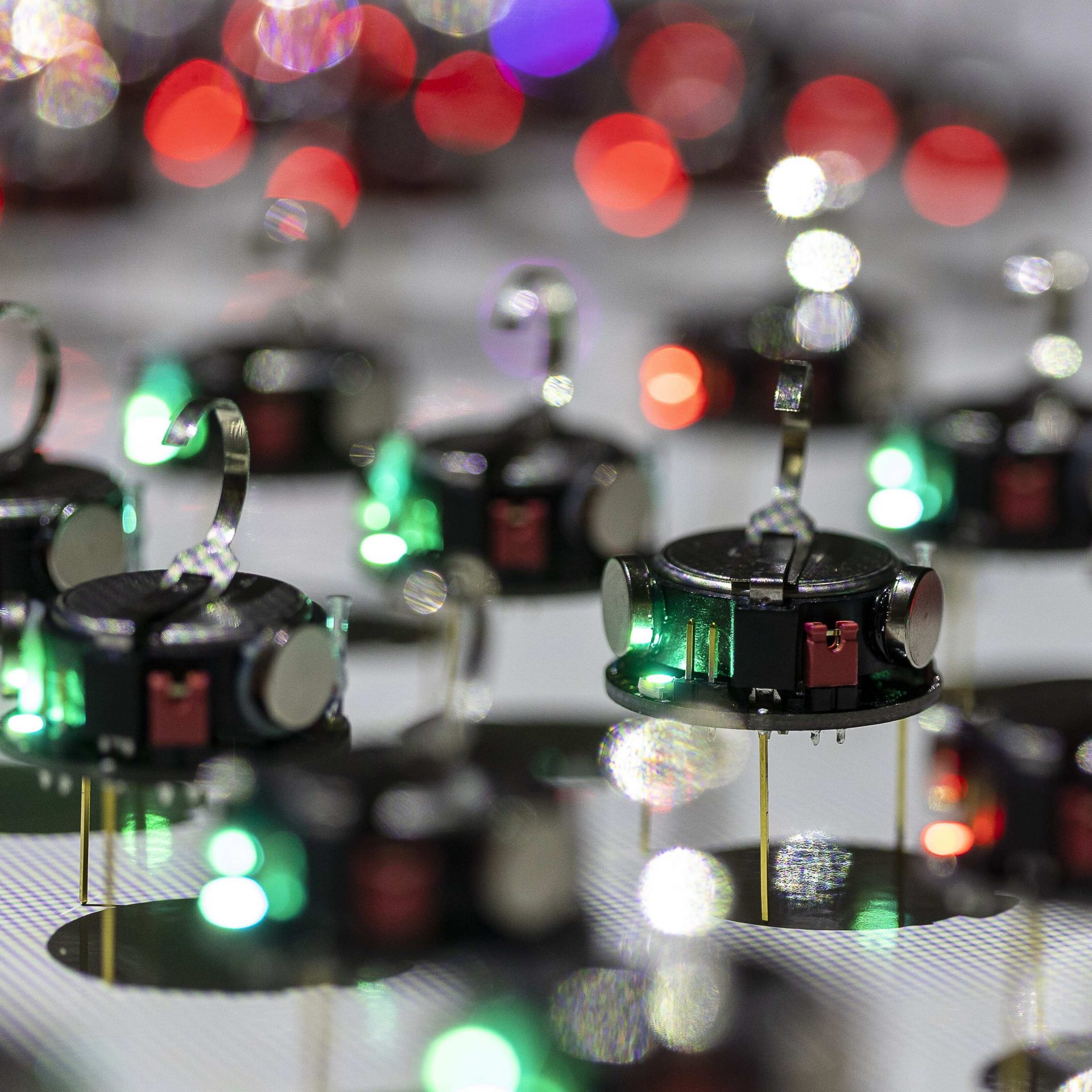
    Andreagiovanni Reina (Université Libre De Bruxelles), “The Power of Inhibition for Collective Decision Making in Minimalistic Robot Swarms”

    Abstract: I investigate how large groups of simple robots can reach a consensus with decentralized minimalistic algorithms. Simple robots can be useful in nanorobotics and in scenarios with low-cost requirements. I show that through decentralized voting algorithms, swarms of minimalistic robots can make best-of-n decisions. In my research, I show that using a biologically-inspired voting

  • Thu 9
    Thursday Morning Talk
    9 February, 2023 @ 4:00 pm - 5:30 pm

    Oliver Brock (Science of Intelligence), “About the Interplay of Embodiment and Learning in Intelligent Systems”

    MAR 2.057

    Abstract: Biological intelligent systems manifest their intelligence in physical interactions with other agents and with their environment. Such interactions require embodiment. Intelligence, both artificial and biological, also requires some kind of learning. But what is the relationship between the two? How should the two interact? Do they even have to? What could be a common

  • Thu 16
    Thursday Morning Talk
    16 February, 2023 @ 10:00 am - 11:00 am

    Julten Abdelhalim (Science of Intelligence), “Tips and Guidelines for your grant application in Germany”

    Abstract:  This talk will be targeting junior postdocs and phd at their final stages. It will be a short and brief introduction to the major options for grants (those aiming at the stars or smaller ones). Julten will offer some quick tips on the application process. She will also share her own experience in applying

  • Thu 23
    Thursday Morning Talk
    23 February, 2023 @ 10:00 am - 11:00 am

    Ryan Burnell, “A Cognitive Approach to the Evaluation of AI Systems”

    Abstract: The capabilities of AI systems are improving rapidly, and these systems are being deployed in increasingly complex and high-stakes contexts, from self-driving cars to the detection of medical conditions. As the importance of AI grows, so too does the need for robust evaluation. If we want to determine the extent to which systems are

  • Mon 27
    External Event
    27 February, 2023 - 3 March, 2023

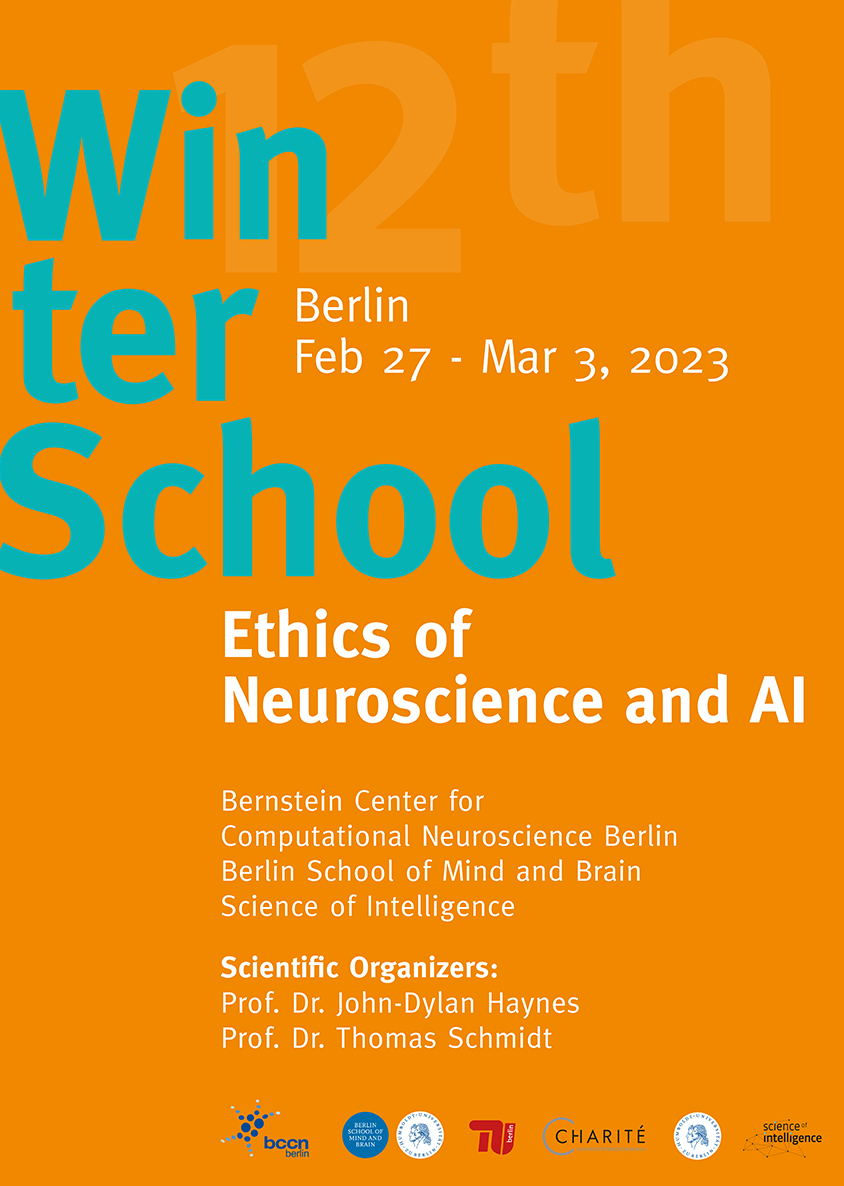
    Winter School “Ethics of Neuroscience and AI” 2023

    The 12th Winter School "Ethics of Neuroscience and AI" is taking place on Feb 27 - March 3, 2023. It is organized by the BCCN Berlin/ICCN, the Berlin School of Mind and Brain, and the Excellence Cluster "Science of Intelligence". The event is tailored for MSc and PhD students, but covers a range of topics

  • Tue 28
    External Event
    28 February, 2023 - 4 March, 2023

    Winter School “Ethics of Neuroscience and AI” 2022

    The 11th Winter School "Ethics of Neuroscience and AI" is taking place on Feb 28 - March 4, 2022. It is organized by the BCCN Berlin/ICCN, the Berlin School of Mind and Brain, and the Excellence Cluster "Science of Intelligence". The event is tailored for MSc and PhD students, but covers a range of topics

  • Previous Events
  • Today
  • Next Events
  • Google Calendar
  • iCalendar
  • Outlook 365
  • Outlook Live
  • Export .ics file
  • Export Outlook .ics file

Science of
Intelligence

Funded by the Deutsche Forschungsgemeinschaft (DFG, German Research Foundation) under Germany ́s Excellence Strategy – EXC 2020/1 and 2020/2 – Project number 390523135.

Marchstr. 23 – MAR 5-2
10587 Berlin
Email: info@scioi.de
Tel: +49 30 314 70660

  • Instagram Icon
  • Facebook Icon
  • Youtube Icon
  • Twitter Icon

Imprint | Data Protection

Newsletter

Subscribe to our newsletter to receive the latest news from SCIoI.

Subscribe

Useful links

Doctoral Program
Publications
Events
Press Room
Contacts
Jobs and Research Positions