Asieh Daneshi (Science of Intelligence), “Is risky behavior contagious?”
Thursday Morning TalkMore details to follow. Image created with DALL-E by Maria Ott.
More details to follow. Image created with DALL-E by Maria Ott.
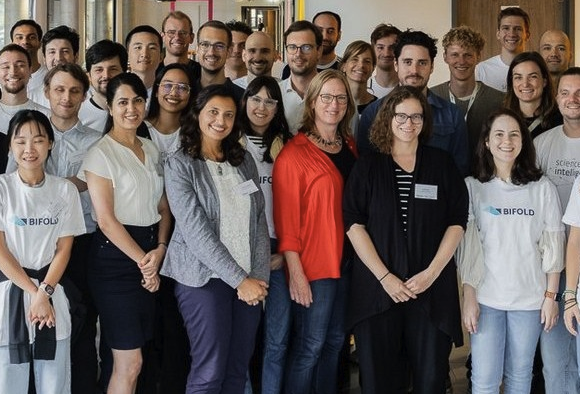
As artificial intelligence (AI) reshapes the landscape of scientific discovery, the need for openness, transparency, and reproducibility in research has never been more urgent. The 2025 Berlin Summer School on Artificial Intelligence and Society, jointly organized by the Berlin Institute for the Foundations of Learning and Data (BIFOLD), the Weizenbaum Institute for the Networked Society,

This event is for registered attendees. Open data infrastructure refers to the systems, frameworks, and processes put in place to collect, store, manage, and share data generated or held by government, science, and other public institutions. It is meant to ensure that public data is accessible, high-quality, secure, and usable by a wide range of

Abstract: Since the release of ChatGPT and other generative AI applications, research institutions as well as various stakeholders such as research funders and publishers have been discussing how the use of AI in research should be dealt with from the perspective of research integrity. While a consensus on some matters was quickly reached, other issues

Abstract: We explore how neuro-symbolic AI, i.e., combining neural networks with symbolic knowledge representation, can drive the next generation of open, transparent, and responsible scientific research. By combining the adaptability of machine learning with the interpretability of structured knowledge, neuro-symbolic approaches offer powerful tools for enhancing reproducibility, semantic interoperability, and trust in AI-driven science. With examples

Artificial intelligence has advanced rapidly through larger and deeper neural networks, yet fundamental questions remain about how to optimize network dynamics for performance and adaptability. This study shows that deep neural networks (DNNs), like biological brains, perform optimally when operating near a critical phase transition - poised between active and inactive dynamics. Drawing from physics

Abstract: Many social species use signals such as vocalizations to coordinate a range of group behaviors, from coming to consensus on where to move to banding together against threats. Despite their widespread importance, these behaviors remain challenging to study in the wild because doing so requires monitoring many individuals simultaneously. In this talk, I will
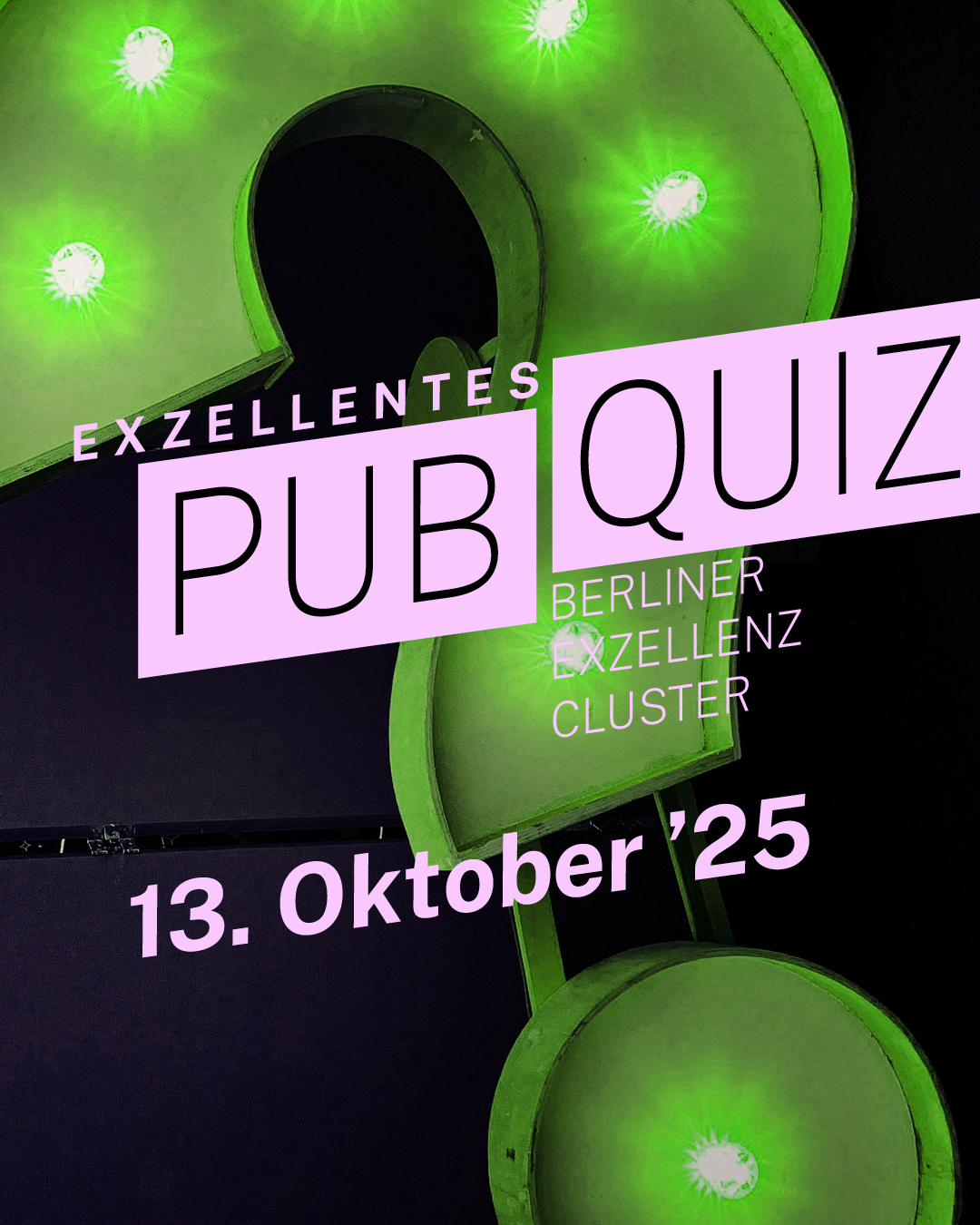
Dive into the wonderful world of research of the seven Berlin Clusters of Excellence: from literature to chemistry, from politics to AI, you and your team can find answers for exciting and surprising questions from the clusters’ research areas. So seek fellows and think of your team name! Every quiz evening focuses on the research

More details to follow.

More details to follow. Photo by Prince Patel on Unsplash.

Abstract The size and complexity of current Deep Artificial Neural Networks pose remarkable challenges to our attempts of explaining and understanding their workings. In this talk, I put forward a proposal for complementing existing efforts to that aim, inspired by research on cognitive ontology in philosophy of cognitive science. In particular, I suggest that, as

The Robotics Institute Germany (RIG) offers weekly insights into current research work on robotics. In RIG's weekly online lectures, leading robotics researchers present the latest developments, challenges, and visions and answer questions from the audience. SCIoI spokesperson Oliver Brock will kick off the series with a talk about the future of robotics and AI. He
Marchstr. 23 – MAR 5-2
10587 Berlin
Email: info@scioi.de
Tel: +49 30 314 70660